MINDFRAME
GALLERY
2025
YEAR
Figma
Personal Project
TYPE
TOOLKIT
15 days
TIMEFRAME
Far beyond simple wireframes, the meticulously crafted high-fidelity mockups served as a dynamic blueprint, transforming
abstract concepts into realistic, detailed representations by incorporating actual branding, real content, and a defined color
palette, thereby simulating the product's final look and feel to create a profoundly engaging and convincing design experience.
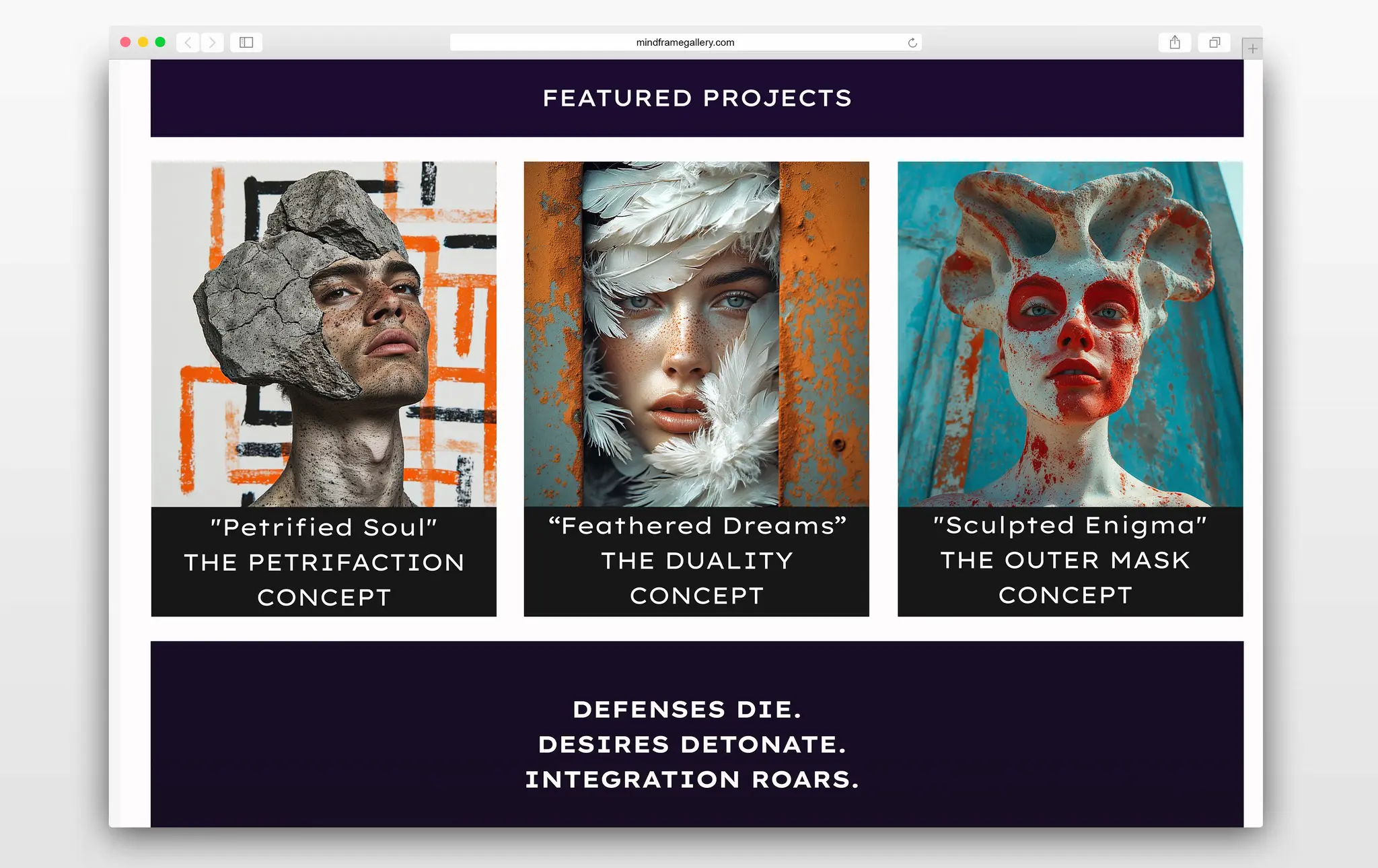
Far beyond simple wireframes, the meticulously crafted high-fidelity mockups served as a dynamic blueprint, transforming abstract concepts into realistic, detailed representations by incorporating actual branding, real content, and a defined color palette, thereby simulating the product's final look and feel to create a profoundly engaging and convincing design experience.
Far beyond simple wireframes, the meticulously crafted high-fidelity mockups served as a dynamic blueprint, transforming abstract concepts into realistic, detailed representations by incorporating actual branding, real content, and a defined color palette, thereby simulating the product's final look and feel to create a profoundly engaging and convincing design experience.
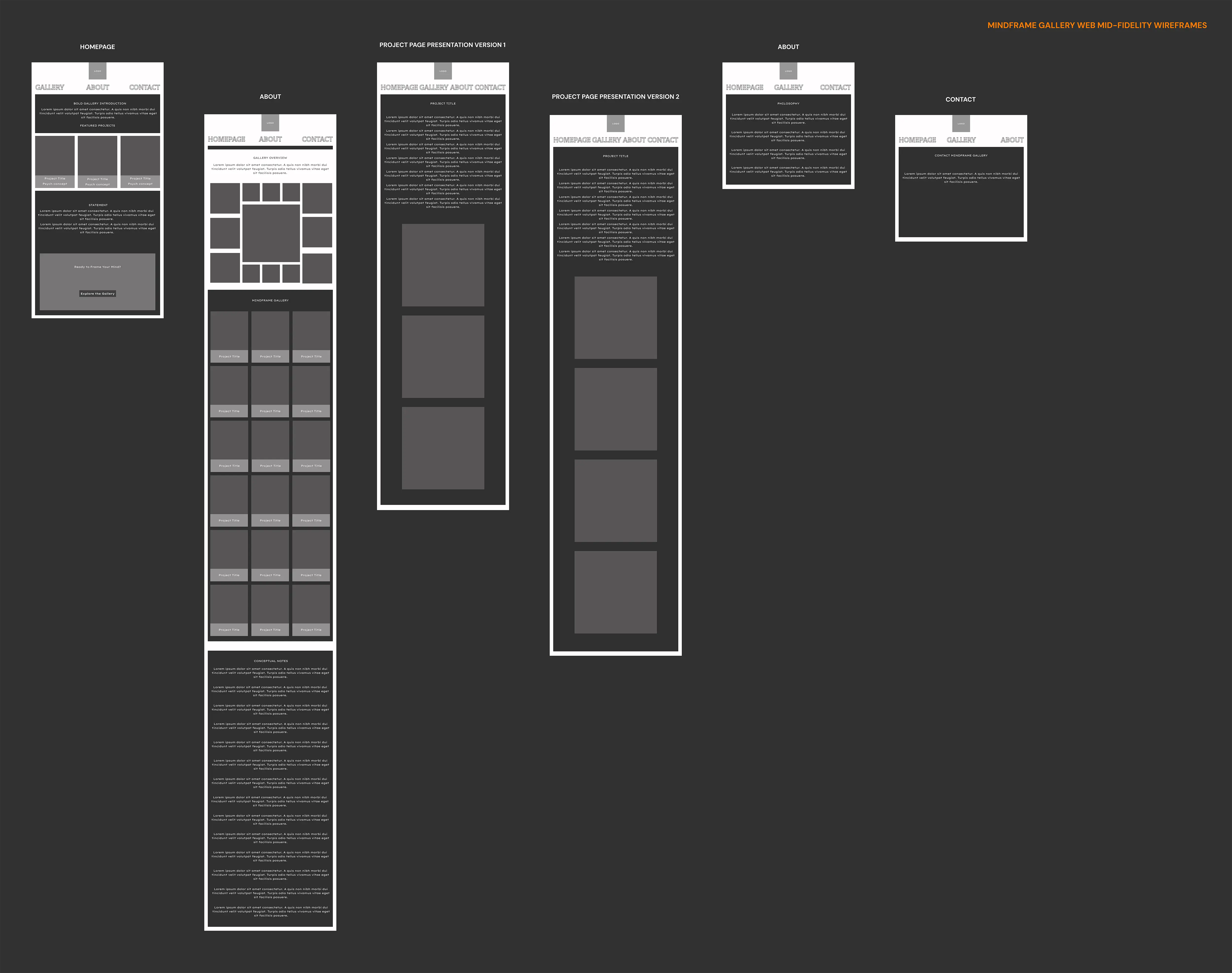
The implementation of mid-fidelity wireframes on web interfaces represents a strategic leap forward, introducing
essential structure while remaining easy to adapt, thereby fostering rapid iteration and creative problem-solving;
this clarity effectively directs core elements like structure and functionality, streamlining the process,and critically,
enabling early-stage usability testing to validate a logical and user-centric design approach well in advance of resource intensive, high-fidelity refinement.
The implementation of mid-fidelity wireframes on web interfaces represents a strategic leap forward, introducing essential structure while remaining easy to adapt, thereby fostering rapid iteration and creative problem-solving, this clarity effectively directs core elements like structure and functionality, streamlining the process, and critically, enabling early-stage usability testing to validate a logical and user-centric design approach well in advance of resource intensive, high-fidelity refinement.
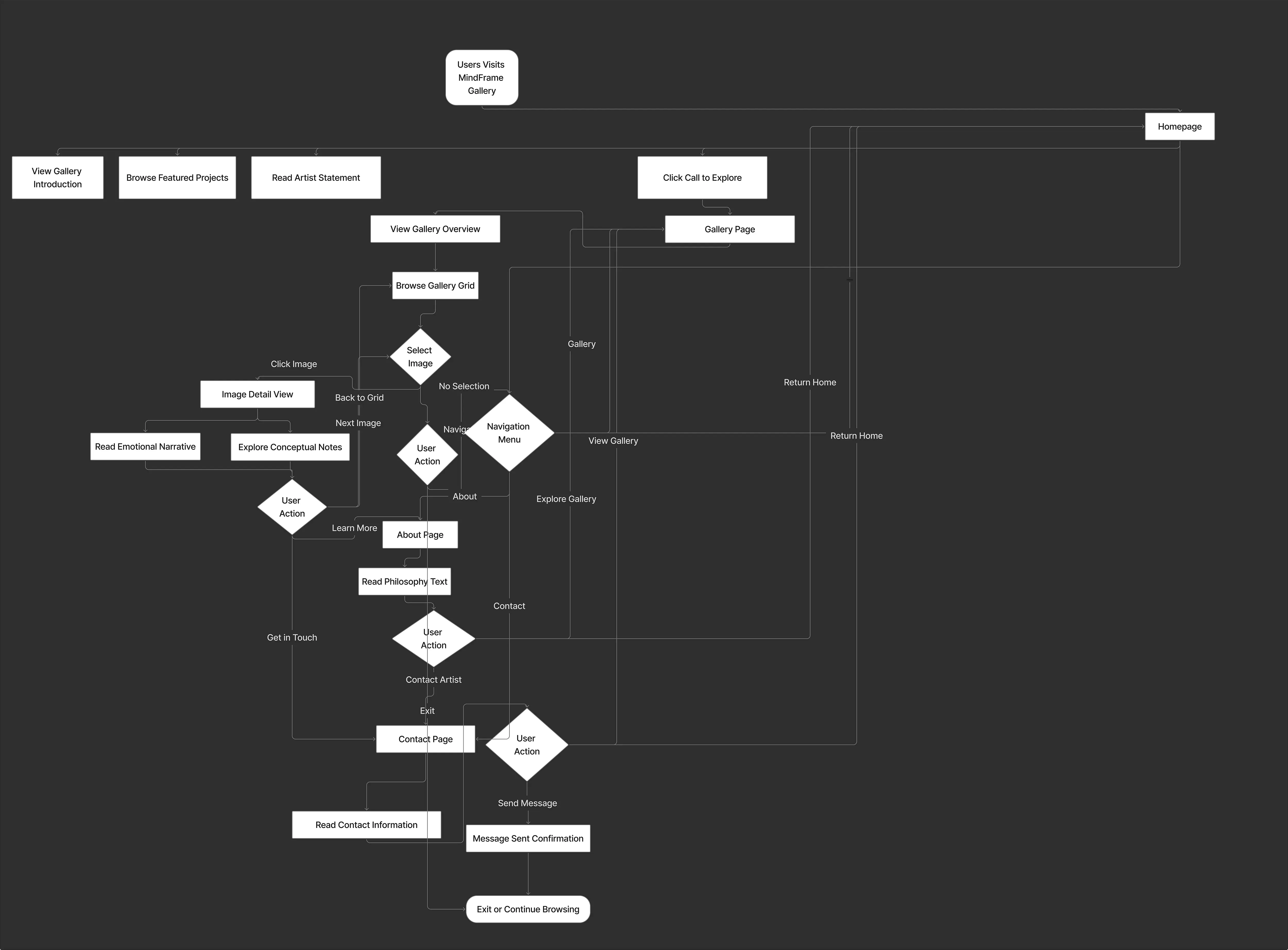
Serving as a crucial visual aid, the user flow diagram precisely maps out the intended logic of user interaction,
meticulously demonstrating the exact sequence of navigation across various pages and states to ensure a clear,
intuitive, and unobstructed path that leads every user seamlessly toward their intended goal or desired outcome.
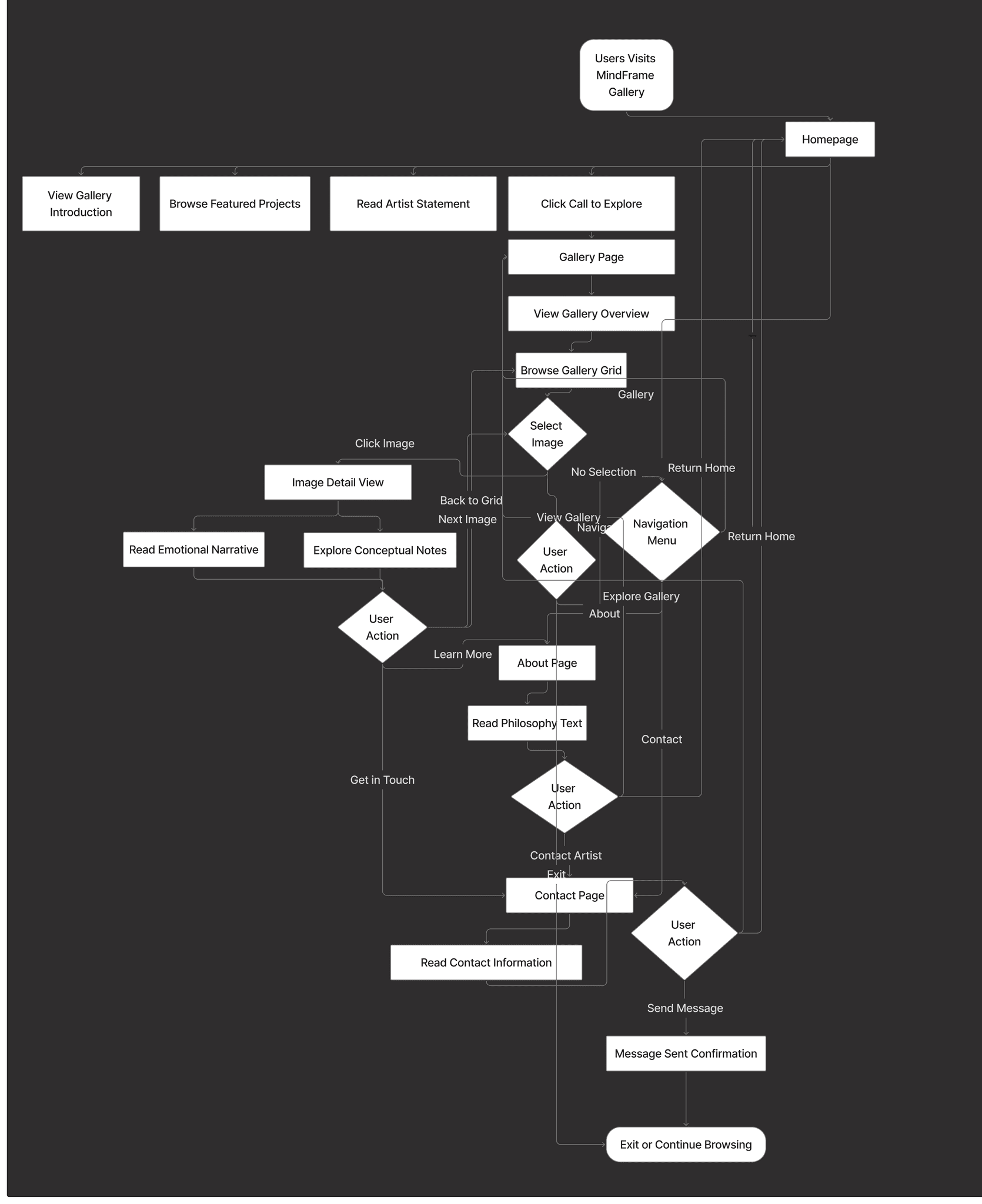
Serving as a crucial visual aid, the user flow diagram precisely maps out the intended logic of user interaction,
meticulously demonstrating the exact sequence of navigation across various pages and states to ensure a clear,
intuitive, and unobstructed path that leads every user seamlessly toward their intended goal or desired outcome.
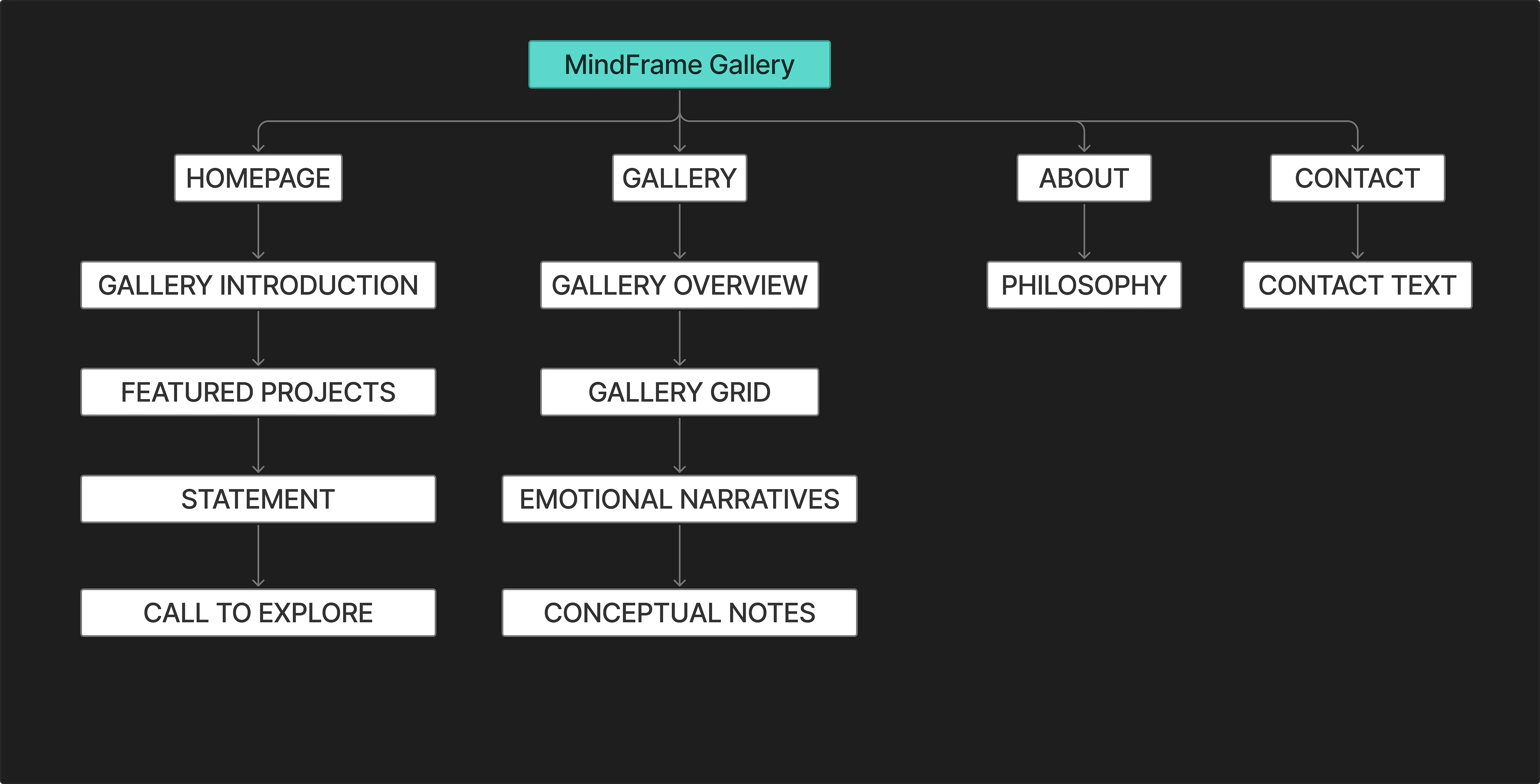
The site map did organizes content hierarchically, showing the relationships between pages.It also helped design
intuitive paths for users to find information easily, reducing frustration.
The site map did organizes content hierarchically, showing the relationships between pages. It also helped design
intuitive paths for users to find information easily, reducing frustration.

©2026
©2026
PROBLEM

The MindFrame Gallery website emerges not as mere digital infrastructure, but as a deliberate philosophical
intervention, a living extension of the gallery's core thesis where hyper-real visions dismantle perceptual boundaries, transforming passive browsing into active existential confrontation.
The MindFrame Gallery is a provocative sanctuary where AI forged visions dismantle the fragile boundaries between organic essence and constructed artifice, inviting contemplative immersion into the philosophical tensions that define contemporary existence.
The MindFrame Gallery does not merely display, it engineers perceptual rupture, scaling intimate human silhouettes into monumental hybrids against architectural backdrops, to question whether soul resides in organic curvature or geometric rigidity.
The MindFrame Gallery website emerges not as mere digital infrastructure, but as a deliberate philosophical intervention, a living extension of the gallery's core thesis where hyper-real visions dismantle perceptual boundaries, transforming passive browsing into active existential confrontation.
The MindFrame Gallery is a provocative sanctuary where AI forged visions dismantle the fragile boundaries between organic essence and constructed artifice, inviting contemplative immersion into the philosophical tensions that define contemporary existence.
The MindFrame Gallery does not merely display, it engineers perceptual rupture, scaling intimate human silhouettes into monumental hybrids against architectural backdrops, to question whether soul resides in organic curvature or geometric rigidity.
The MindFrame Gallery website emerges not as mere digital infrastructure, but as a deliberate philosophical
intervention, a living extension of the gallery's core thesis where hyper-real visions dismantle perceptual boundaries, transforming passive browsing into active existential confrontation.
The MindFrame Gallery is a provocative sanctuary where AI forged visions dismantle the fragile boundaries between organic essence and constructed artifice, inviting contemplative immersion into the philosophical tensions that define contemporary existence.
The MindFrame Gallery does not merely display, it engineers perceptual rupture, scaling intimate human silhouettes into monumental hybrids against architectural backdrops, to question whether soul resides in organic curvature or geometric rigidity.
MINDFRAME GALLERY
2025
Figma
15 days
Personal Project
YEAR
TOOLKIT
TIMEFRAME
TYPE
Contemporary AI art galleries suffer from digital dilution by compressing philosophical depth into algorithmic feeds,
stripping existential tensions against architectural permanence from their tactile, perceptual impact.
Platforms reduce conceptual depth to swipeable NFTs and generic sales pitches, erasing authenticity.
Uncompensated artist data fuels proprietary AI dominance, segmenting markets where 79% reject AI as "real art"
amplifying alienation through physical absence.
Existing AI platforms fragment personas, collectors crave provenance but face opaque marketplaces, psychologists
seek therapeutic depth yet encounter superficial captions, AI designers demand process breakdowns amid generic
outputs, leaving this creative ecosystem starved of targeted philosophical resonance.
Without dedicated platforms everything gets reduced to social media,while losing philosophical views and favoring
casual scrolling that trivialized existential narratives.
Contemporary AI art galleries suffer from digital dilution by compressing philosophical depth into algorithmic feeds, stripping existential tensions against architectural permanence from their tactile, perceptual impact.
Platforms reduce conceptual depth to swipeable NFTs and generic sales pitches, erasing authenticity.
Uncompensated artist data fuels proprietary AI dominance, segmenting markets where 79% reject AI as "real art" amplifying alienation through physical absence.
Existing AI platforms fragment personas, collectors crave provenance but face opaque marketplaces, psychologists
seek therapeutic depth yet encounter superficial captions, AI designers demand process breakdowns amid generic outputs, leaving this creative ecosystem starved of targeted philosophical resonance.
Without dedicated platforms everything gets reduced to social media,while losing philosophical views and favoring
casual scrolling that trivialized existential narratives.
SOLUTION
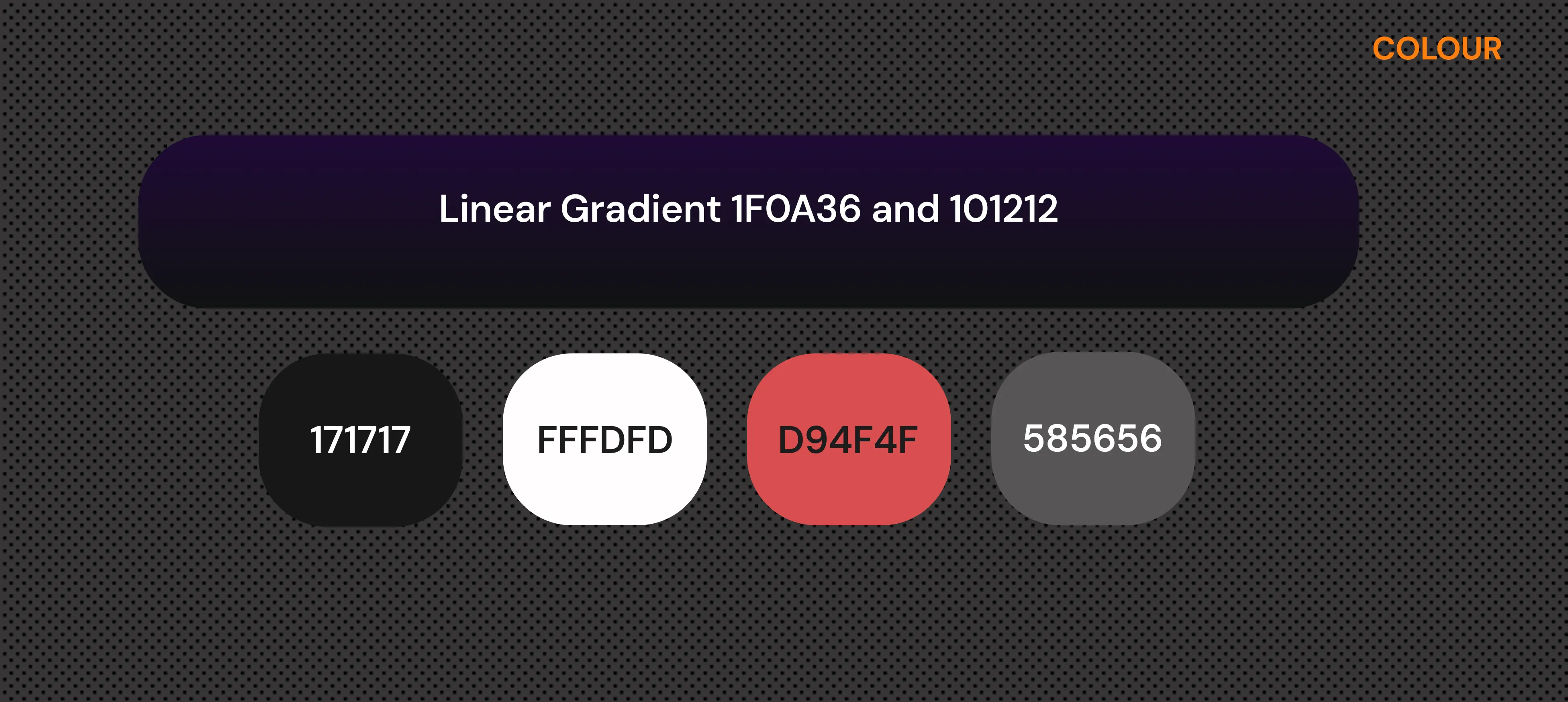
The color for the background graphics that was chosen for MindFrame Gallery is Linear Gradient 1F0A36 and
101212,The Linear Gradient from 1F0A36 (a deep, mystical purple-black) to 101212 (near-pure black with subtle charcoal depth) evokes sophistication, introspection, and enigmatic allure, creating a cosmic void that draws users into contemplative immersion.
It enhances focus on content like MindFrame Gallery's art by reducing visual noise, promoting calm navigation and
psychological "framing" where users feel enveloped in profound insight, ideal for high-end curation sites evoking curiosity and exclusive discovery.
The accent color used for the call to action button is D94F4F, a vibrant coral red, that evokes energy, urgency, and
confident action for a CTA button sparking excitement and immediate response.
The color for the background graphics that was chosen for MindFrame Gallery is Linear Gradient 1F0A36 and 101212,The Linear Gradient from 1F0A36 (a deep, mystical purple-black) to 101212 (near-pure black with subtle
charcoal depth) evokes sophistication, introspection, and enigmatic allure, creating a cosmic void that draws users into contemplative immersion.
It enhances focus on content like MindFrame Gallery's art by reducing visual noise, promoting calm navigation and psychological "framing" where users feel enveloped in profound insight, ideal for high-end curation sites evoking curiosity and exclusive discovery.
The accent color used for the call to action button is D94F4F, a vibrant coral red, that evokes energy, urgency, and confident action for a CTA button sparking excitement and immediate response.
The color for the background graphics that was chosen for MindFrame Gallery is Linear Gradient 1F0A36 and
101212,The Linear Gradient from 1F0A36 (a deep, mystical purple-black) to 101212 (near-pure black with subtle
charcoal depth) evokes sophistication, introspection, and enigmatic allure, creating a cosmic void that draws users into contemplative immersion.
It enhances focus on content like MindFrame Gallery's art by reducing visual noise, promoting calm navigation and
psychological "framing" where users feel enveloped in profound insight, ideal for high-end curation sites evoking curiosity and exclusive discovery.
The accent color used for the call to action button is D94F4F, a vibrant coral red, that evokes energy, urgency, and
confident action for a CTA button sparking excitement and immediate response.
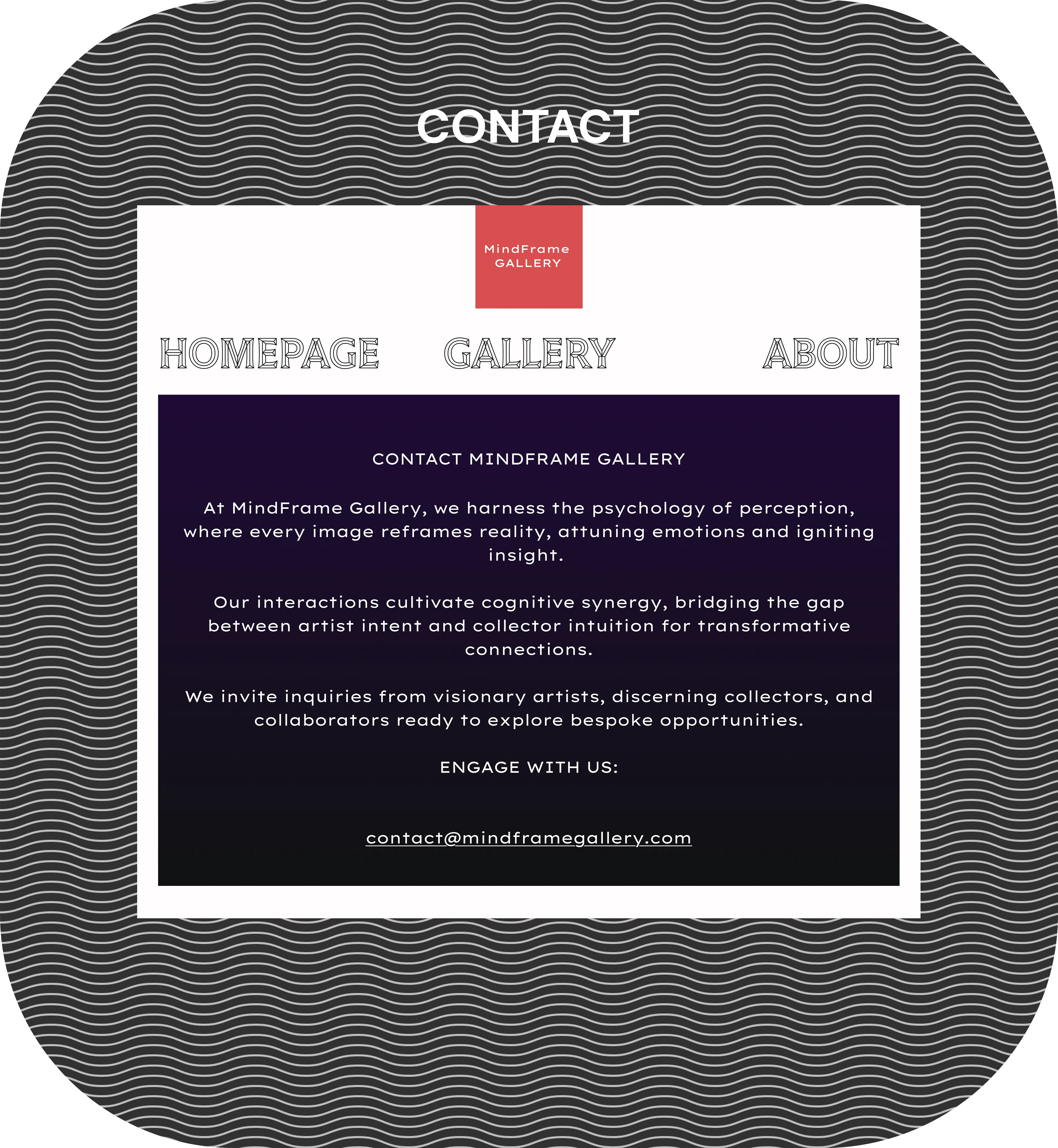
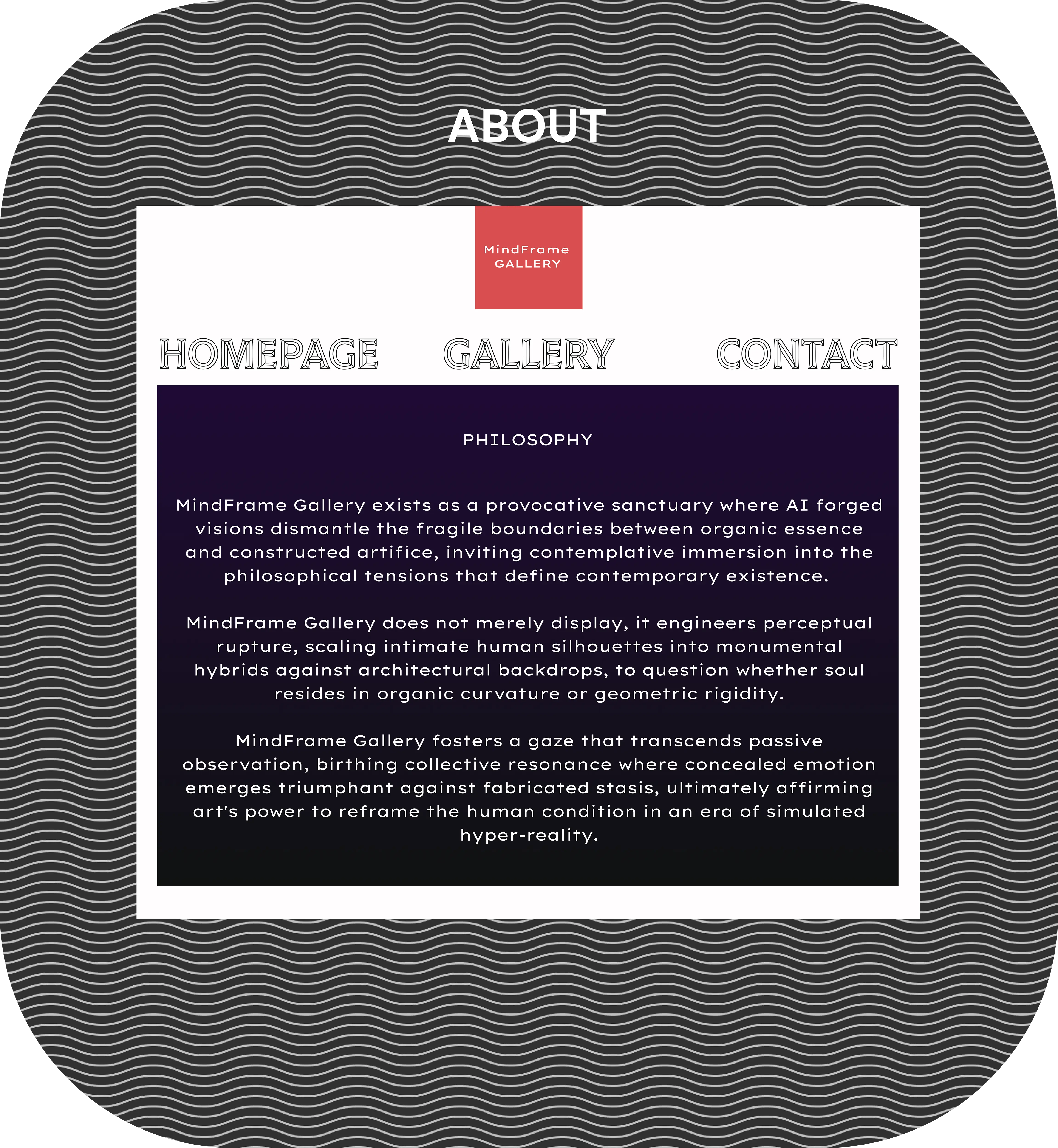
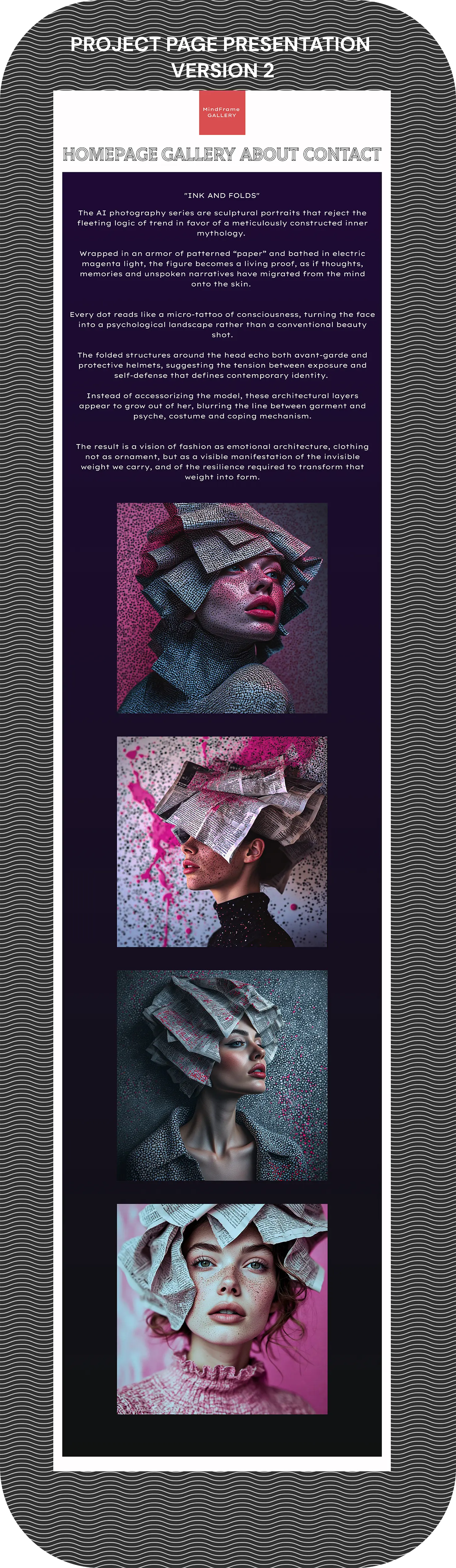
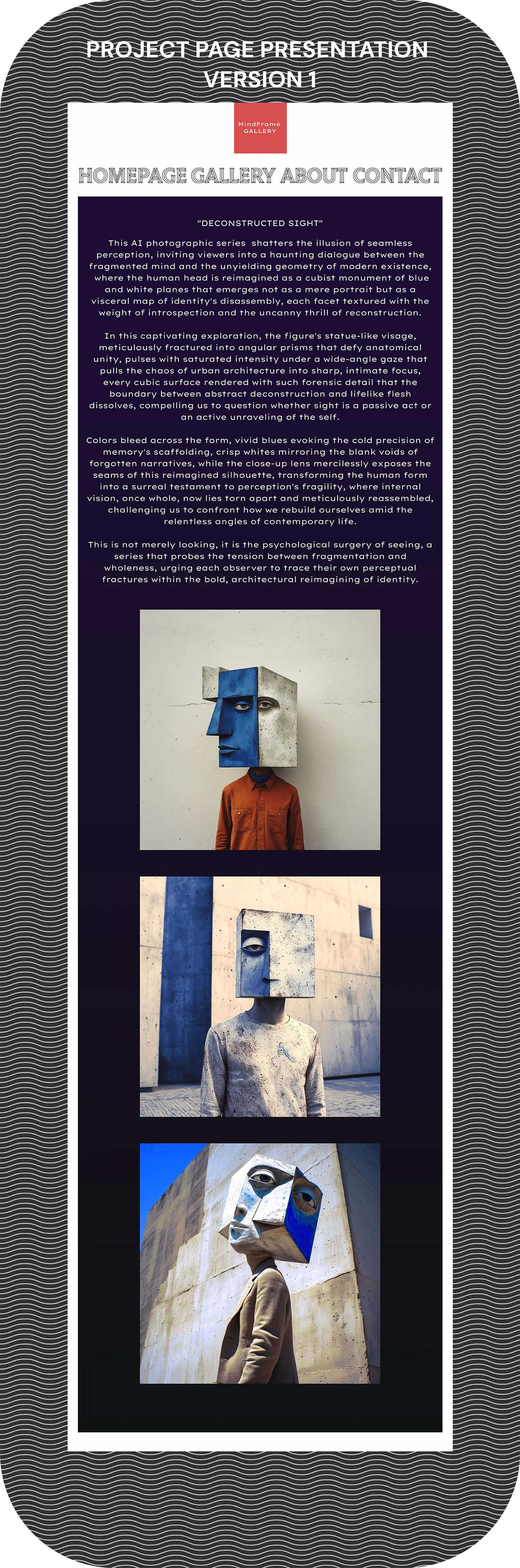
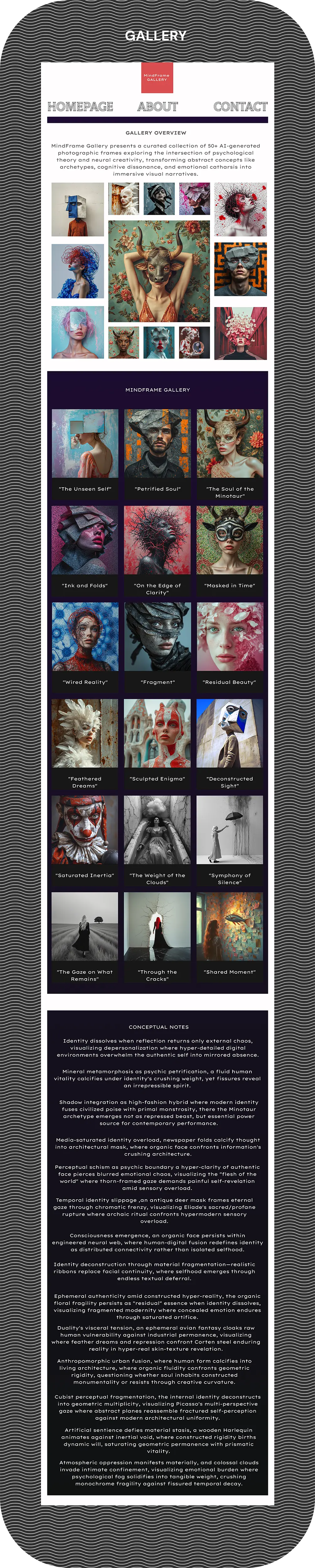
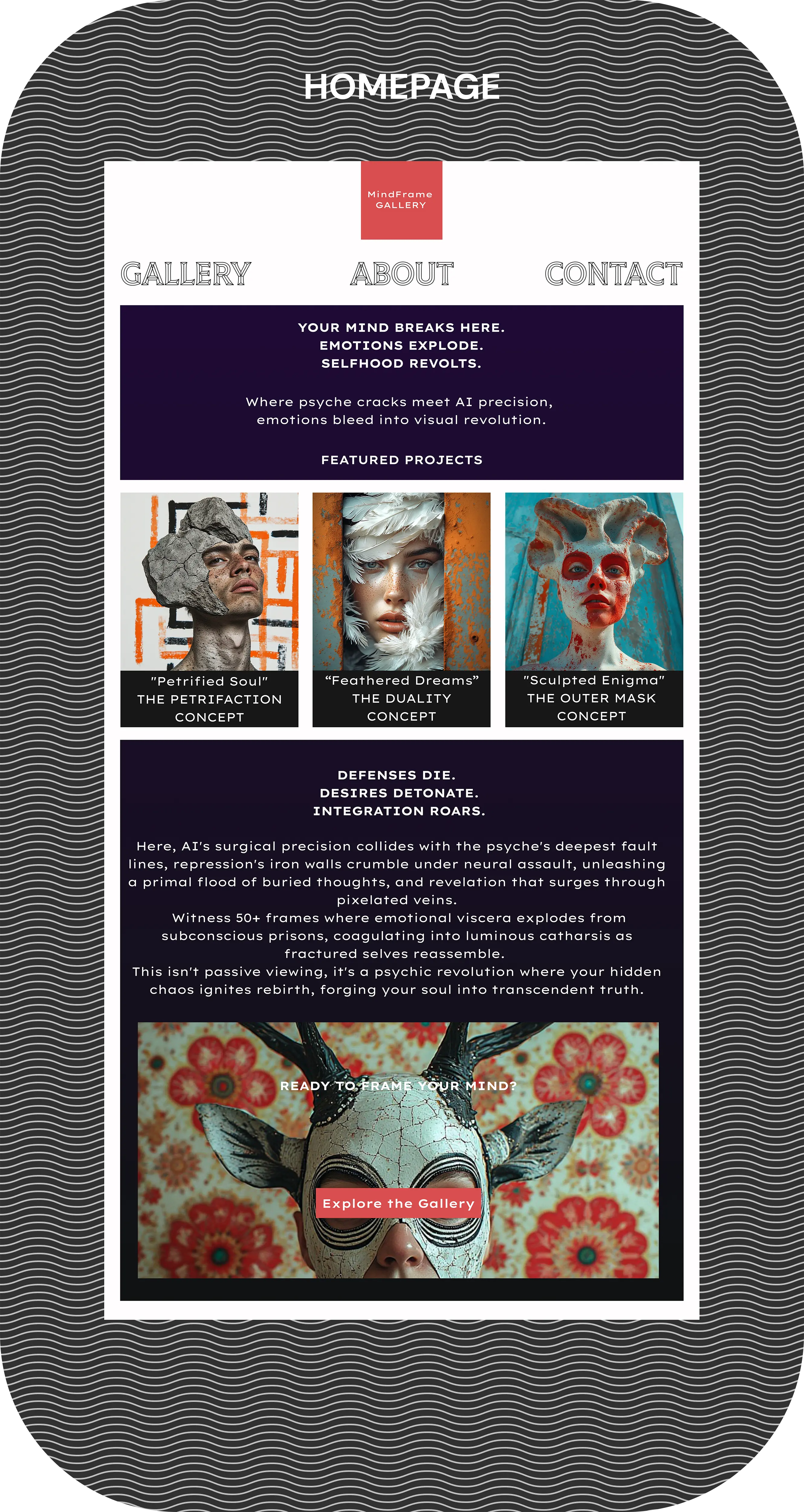
High-fidelity mockups for MindFrame Gallery's web were crafted iteratively , blending psychological user personas with
prismatic distortions to simulate "mind frame" perceptual shifts right from the prototype stage.
High-fidelity mockups for MindFrame Gallery's web were crafted iteratively , blending psychological user personas with prismatic distortions to simulate "mind frame" perceptual shifts right from the prototype stage.
High-fidelity mockups for MindFrame Gallery's web were crafted iteratively , blending psychological user personas with prismatic distortions to simulate "mind frame" perceptual shifts right from the prototype stage.
MindFrame Gallery proposes a transformative solution centered on "framing the mind" curating art that reframes
perception, fosters emotional attunement, and unlocks cognitive synergy between creators and collectors. This
approach succeeds by delivering bespoke connections that turn abstract visions into tangible realities, as evidenced
through professional interactions that bridge artist intent with collector intuition. The gallery's method thrives on
psychological principles like perceptual reframing and shared insight, consistently yielding collaborations that inspire.
MindFrame Gallery's offering revolves around psychologically attuned art curation, where each piece serves as a
"mind frame" to reshape reality and evoke profound resonance.
Success is measured in seamless synergies, collectors find intuitive matches, and all experiences are heightened
with clarity and joy.
By emphasizing cognitive framing and attunement, MindFrame Gallery ensures every exchange sparks insight,
differentiating it in a crowded market and guaranteeing transformative results.
MindFrame Gallery's solution delivers a striking visual impact through meticulously curated "mind frames" that
transform perception, making abstract emotions and insights pop with vivid clarity and emotional depth.
Frames act as perceptual gateways, using color contrasts, like sleek black for sophistication or warm for
nostalgia, to amplify artwork's textures, hues, and details, drawing the eye irresistibly while evoking tailored emotional
responses.
Clean, minimalist layouts prioritize high-resolution artwork grids that evoke curiosity, reducing
cognitive load via consistent patterns like unified color palettes and logical hierarchies and contact flow seamlessly.
MindFrame Gallery proposes a transformative solution centered on "framing the mind" curating art that reframes perception, fosters emotional attunement, and unlocks cognitive synergy between creators and collectors. This approach succeeds by delivering bespoke connections that turn abstract visions into tangible realities, as evidenced through professional interactions that bridge artist intent with collector intuition. The gallery's method thrives on psychological principles like perceptual reframing and shared insight, consistently yielding collaborations that inspire.
MindFrame Gallery's offering revolves around psychologically attuned art curation, where each piece serves as a
"mind frame" to reshape reality and evoke profound resonance. Success is measured in seamless synergies, collectors find intuitive matches, and all experiences are heightened with clarity and joy.
By emphasizing cognitive framing and attunement, MindFrame Gallery ensures every exchange sparks insight,
differentiating it in a crowded market and guaranteeing transformative results.
MindFrame Gallery's solution delivers a striking visual impact through meticulously curated "mind frames" that
transform perception, making abstract emotions and insights pop with vivid clarity and emotional depth.
Frames act as perceptual gateways, using color contrasts, like sleek black for sophistication or warm for
nostalgia, to amplify artwork's textures, hues, and details, drawing the eye irresistibly while evoking tailored emotional responses.
Clean, minimalist layouts prioritize high-resolution artwork grids that evoke curiosity, reducing cognitive load via consistent patterns like unified color palettes and logical hierarchies and contact flow seamlessly.
MindFrame Gallery proposes a transformative solution centered on "framing the mind" curating art that reframes
perception, fosters emotional attunement, and unlocks cognitive synergy between creators and collectors. This
approach succeeds by delivering bespoke connections that turn abstract visions into tangible realities, as evidenced through professional interactions that bridge artist intent with collector intuition. The gallery's method thrives on psychological principles like perceptual reframing and shared insight, consistently yielding collaborations that inspire.
MindFrame Gallery's offering revolves around psychologically attuned art curation, where each piece serves as a
"mind frame" to reshape reality and evoke profound resonance. Success is measured in seamless synergies, collectors find intuitive matches, and all experiences are heightened with clarity and joy.
By emphasizing cognitive framing and attunement, MindFrame Gallery ensures every exchange sparks insight,
differentiating it in a crowded market and guaranteeing transformative results.
MindFrame Gallery's solution delivers a striking visual impact through meticulously curated "mind frames" that
transform perception, making abstract emotions and insights pop with vivid clarity and emotional depth.
Frames act as perceptual gateways, using color contrasts, like sleek black for sophistication or warm for
nostalgia, to amplify artwork's textures, hues, and details, drawing the eye irresistibly while evoking tailored emotional responses.
Clean, minimalist layouts prioritize high-resolution artwork grids that evoke curiosity, reducing cognitive load via consistent patterns like unified color palettes and logical hierarchies and contact flow seamlessly.
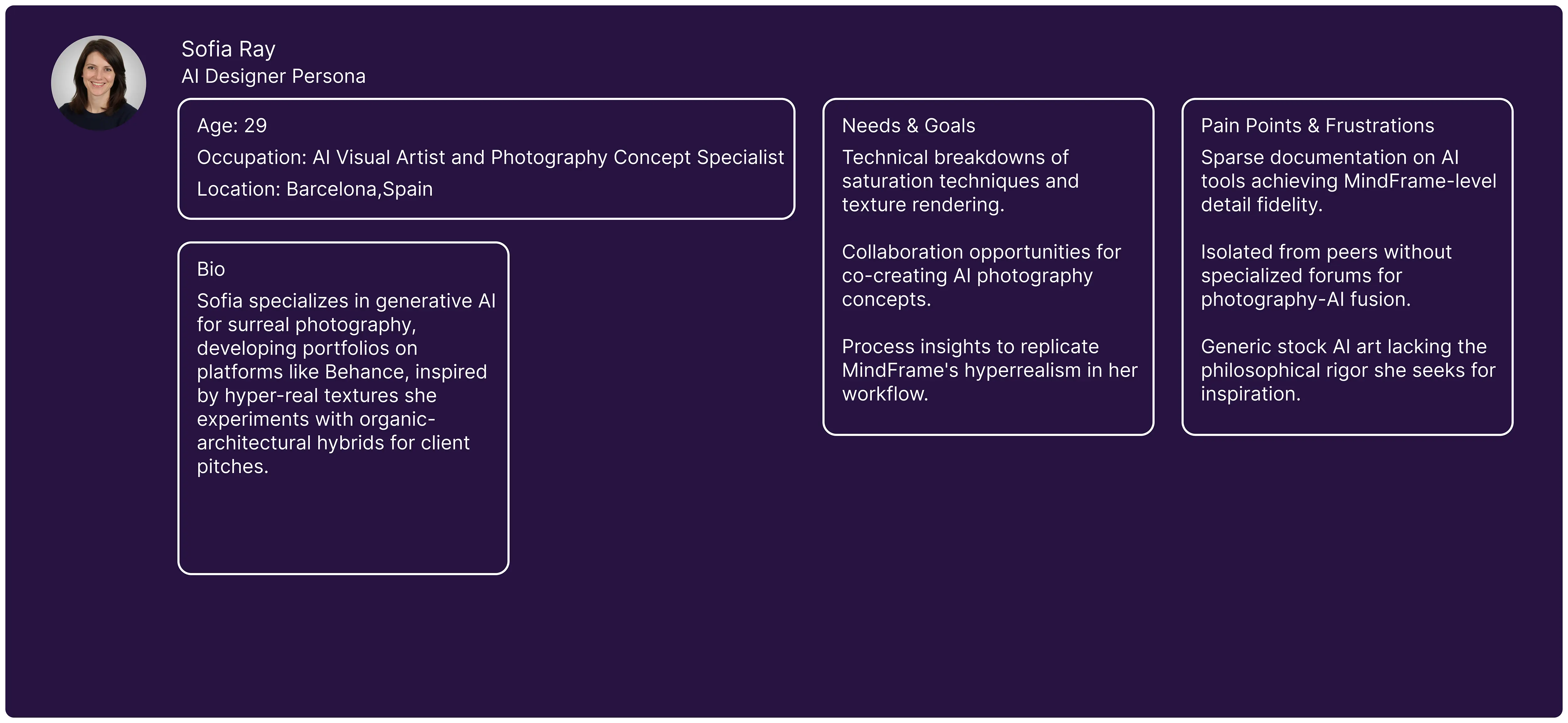
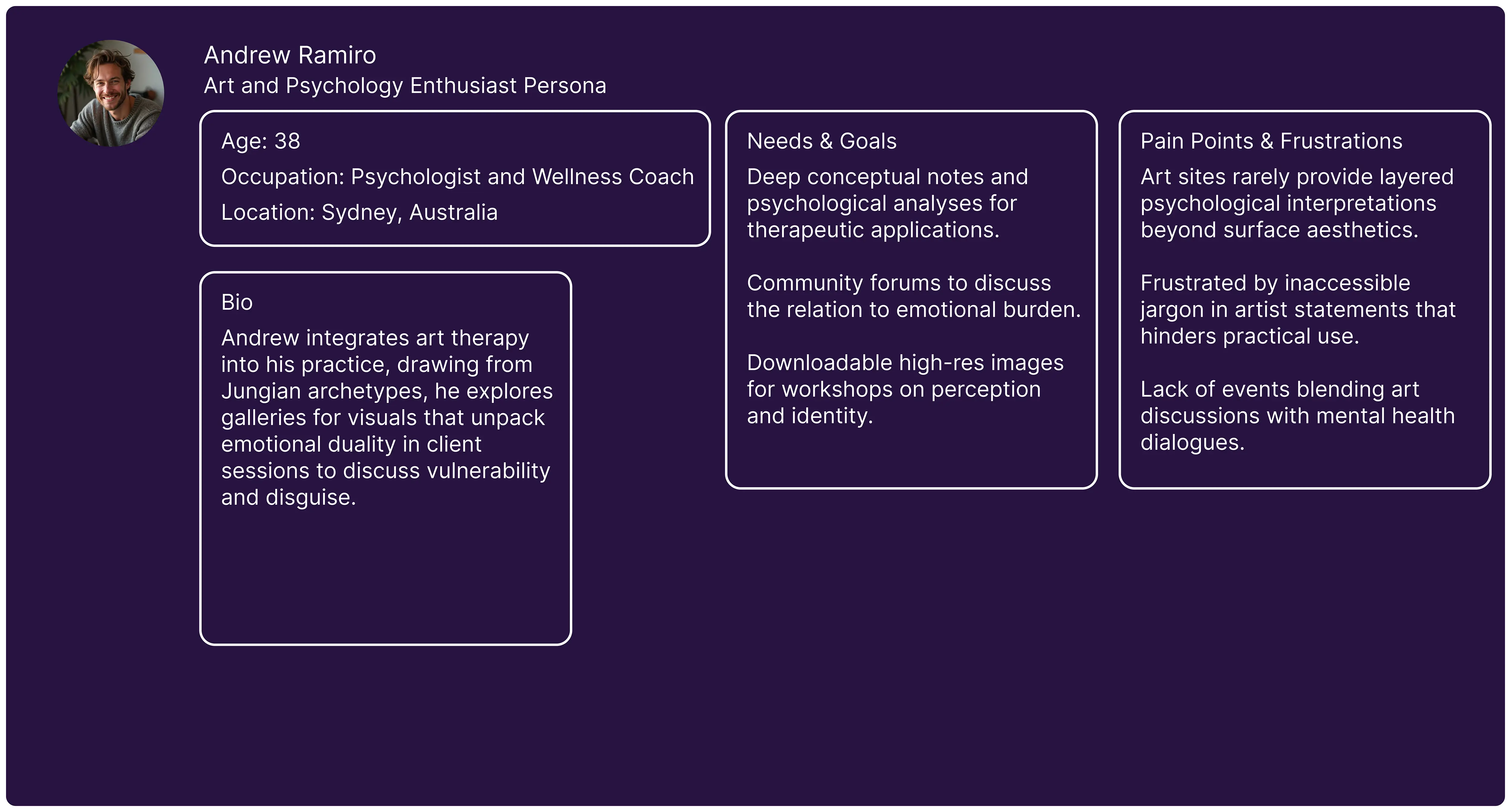
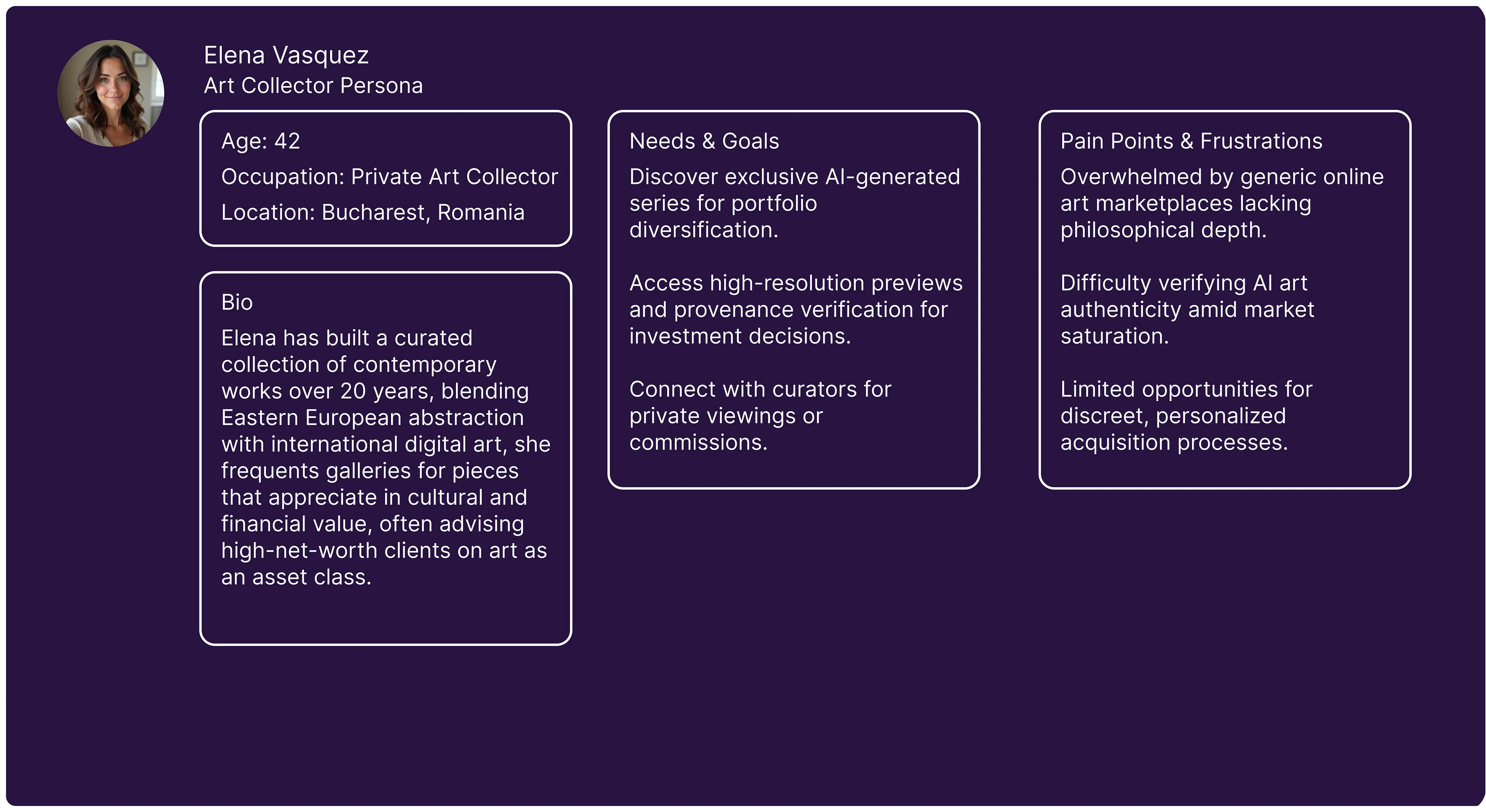
The study of user personas at MindFrame Gallery refines the psychological "mind frame" solution by profiling
visitors,artists, collectors, and connoisseurs, to tailor UI/UX, curation, and interactions for deeper perceptual resonance and engagement.
The study of user personas at MindFrame Gallery refines the psychological "mind frame" solution by profiling visitors, artists, collectors, and connoisseurs, to tailor UI/UX, curation, and interactions for deeper perceptual resonance and engagement.
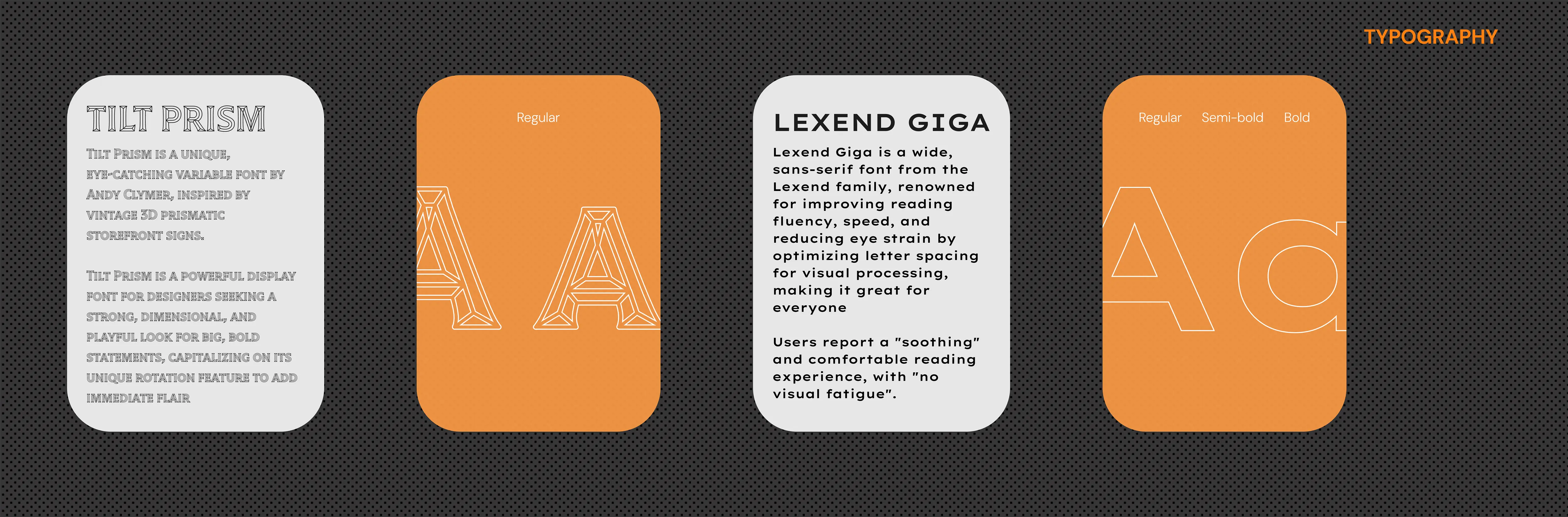
The typography used is TILT PRIMS and LEXEND GIGA.
TILT PRISM for paired with LEXEND GIGA creates a dynamic, psychologically attuned typographic hierarchy on
MindFrame Gallery's website, evoking intellectual intrigue and effortless immersion that aligns perfectly with the
"mind frame" concept.
TILT PRISM's distorted, prismatic letterforms introduce a sense of perceptual shift and creative distortion. mimicking
fractured light through a lens, which grabs attention, sparks curiosity, and psychologically primes users for reframed
reality, ideal for page names like "Contact" or "Gallery".
LEXEND GIGA's geometric sans-serif design, with hyper-spacing and clear letterforms, reduces cognitive load and eye
strain, fostering calm readability and deeper engagement during extended art exploration, evoking competence, clarity,
and subtle modernity that supports emotional attunement.
The typography used is TILT PRIMS and LEXEND GIGA.
TILT PRISM for paired with LEXEND GIGA creates a dynamic, psychologically attuned typographic hierarchy on
MindFrame Gallery's website, evoking intellectual intrigue and effortless immersion that aligns perfectly with the "mind frame" concept.
TILT PRISM's distorted, prismatic letterforms introduce a sense of perceptual shift and creative distortion. mimicking fractured light through a lens, which grabs attention, sparks curiosity, and psychologically primes users for reframed reality, ideal for page names like "Contact" or "Gallery".
LEXEND GIGA's geometric sans-serif design, with hyper-spacing and clear letterforms, reduces cognitive load and eye strain, fostering calm readability and deeper engagement during extended art exploration, evoking competence, clarity, and subtle modernity that supports emotional attunement.
The typography used is TILT PRIMS and LEXEND GIGA.
TILT PRISM for paired with LEXEND GIGA creates a dynamic, psychologically attuned typographic hierarchy on
MindFrame Gallery's website, evoking intellectual intrigue and effortless immersion that aligns perfectly with the
"mind frame" concept.
TILT PRISM's distorted, prismatic letterforms introduce a sense of perceptual shift and creative distortion. mimicking
fractured light through a lens, which grabs attention, sparks curiosity, and psychologically primes users for reframed
reality, ideal for page names like "Contact" or "Gallery".
LEXEND GIGA's geometric sans-serif design, with hyper-spacing and clear letterforms, reduces cognitive load and eye
strain, fostering calm readability and deeper engagement during extended art exploration, evoking competence, clarity, and subtle modernity that supports emotional attunement.
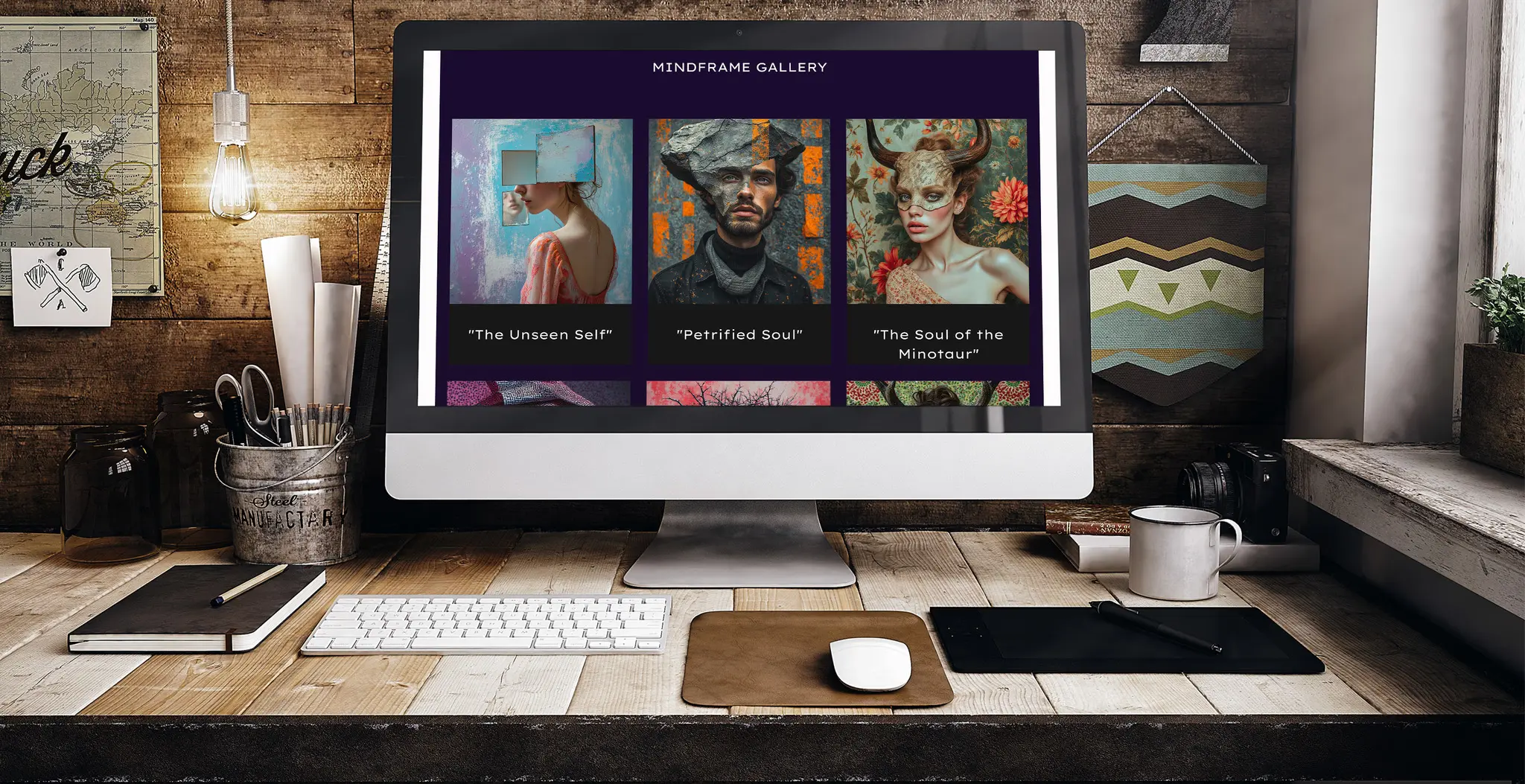
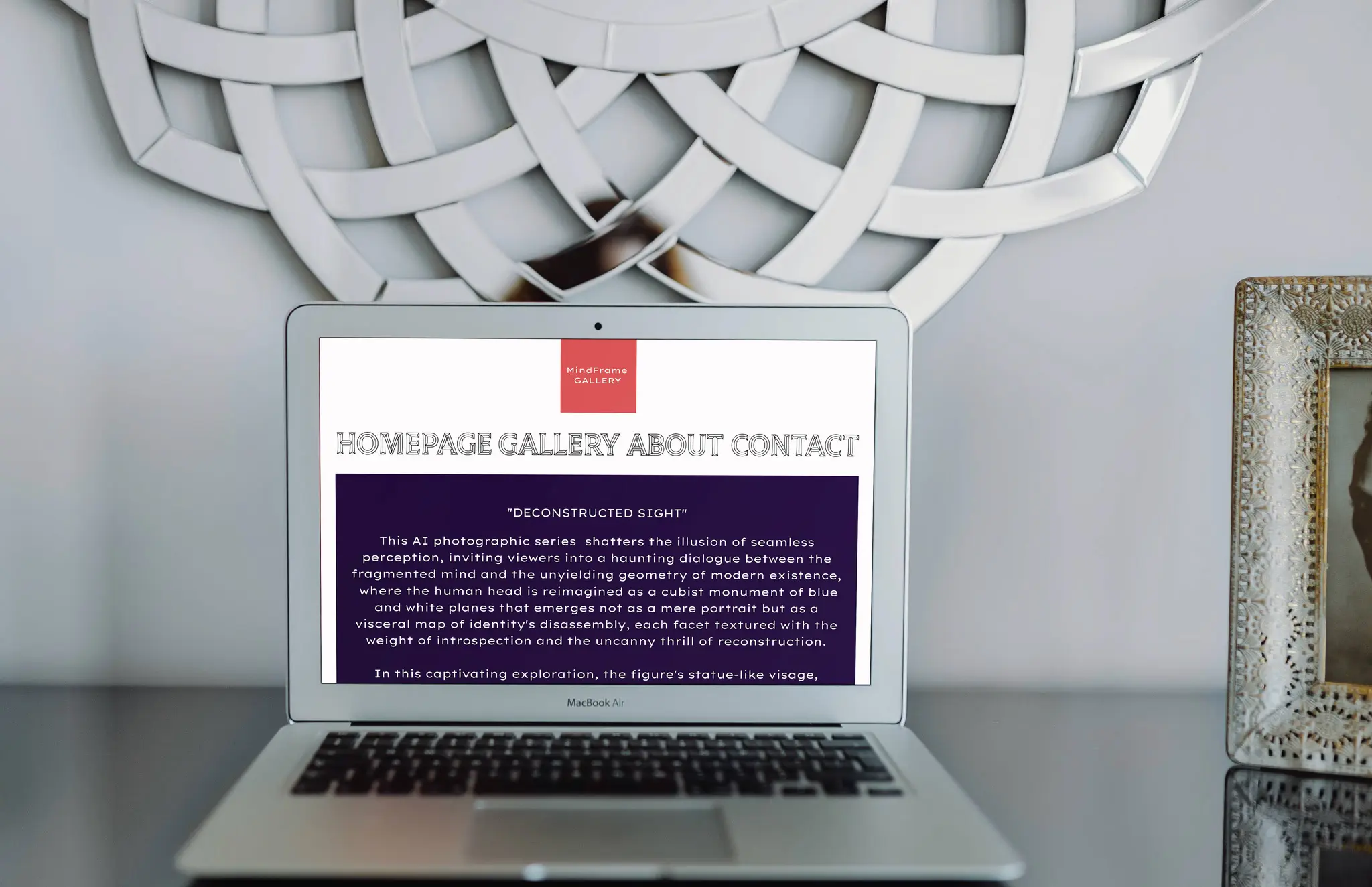
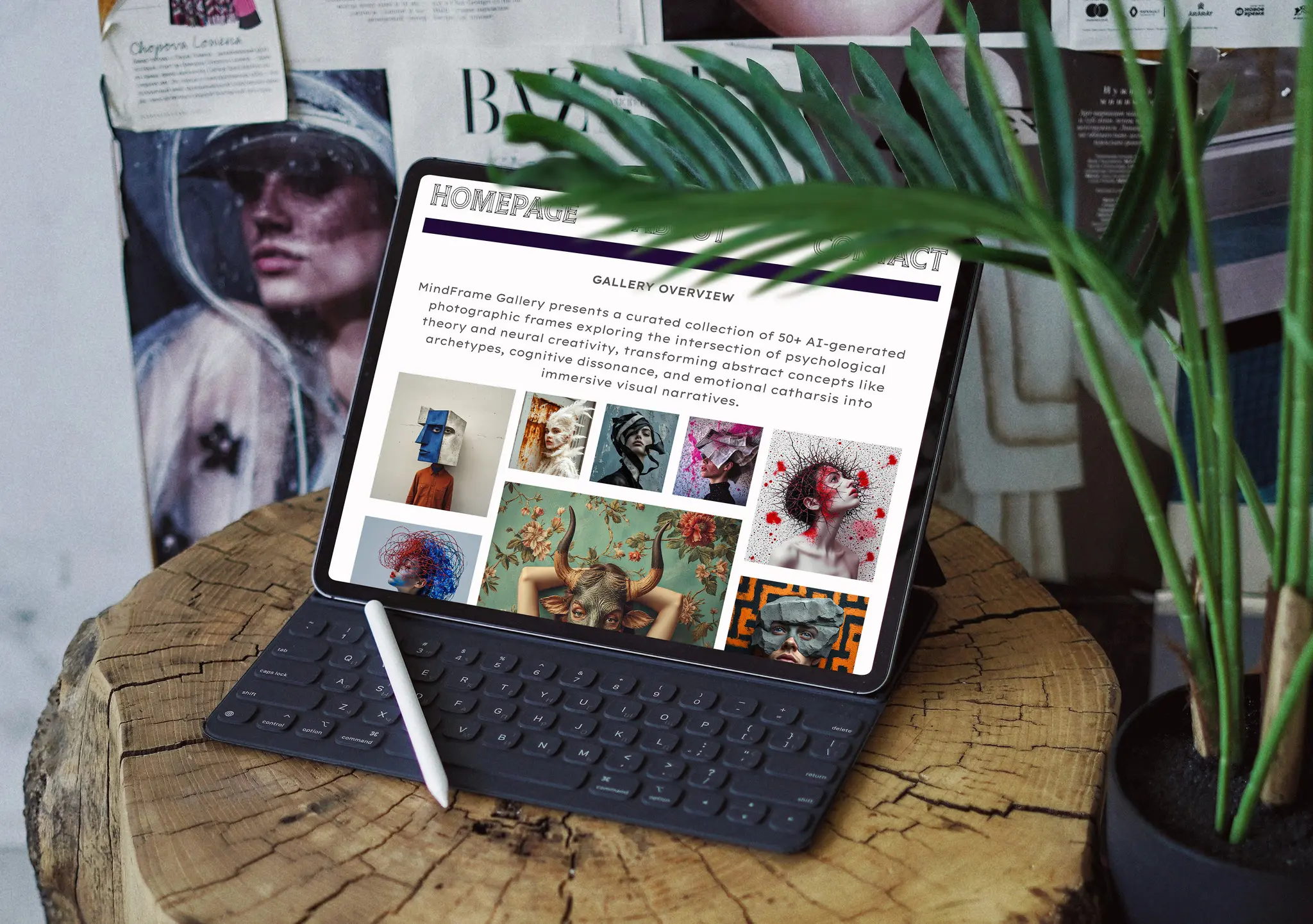
MindFrame Gallery excels in UI/UX design by delivering flawless responsive performance across tablets, laptops, and desktop
monitors, ensuring perceptual harmony and intuitive flow that amplifies its "mind frame" psychological solution.
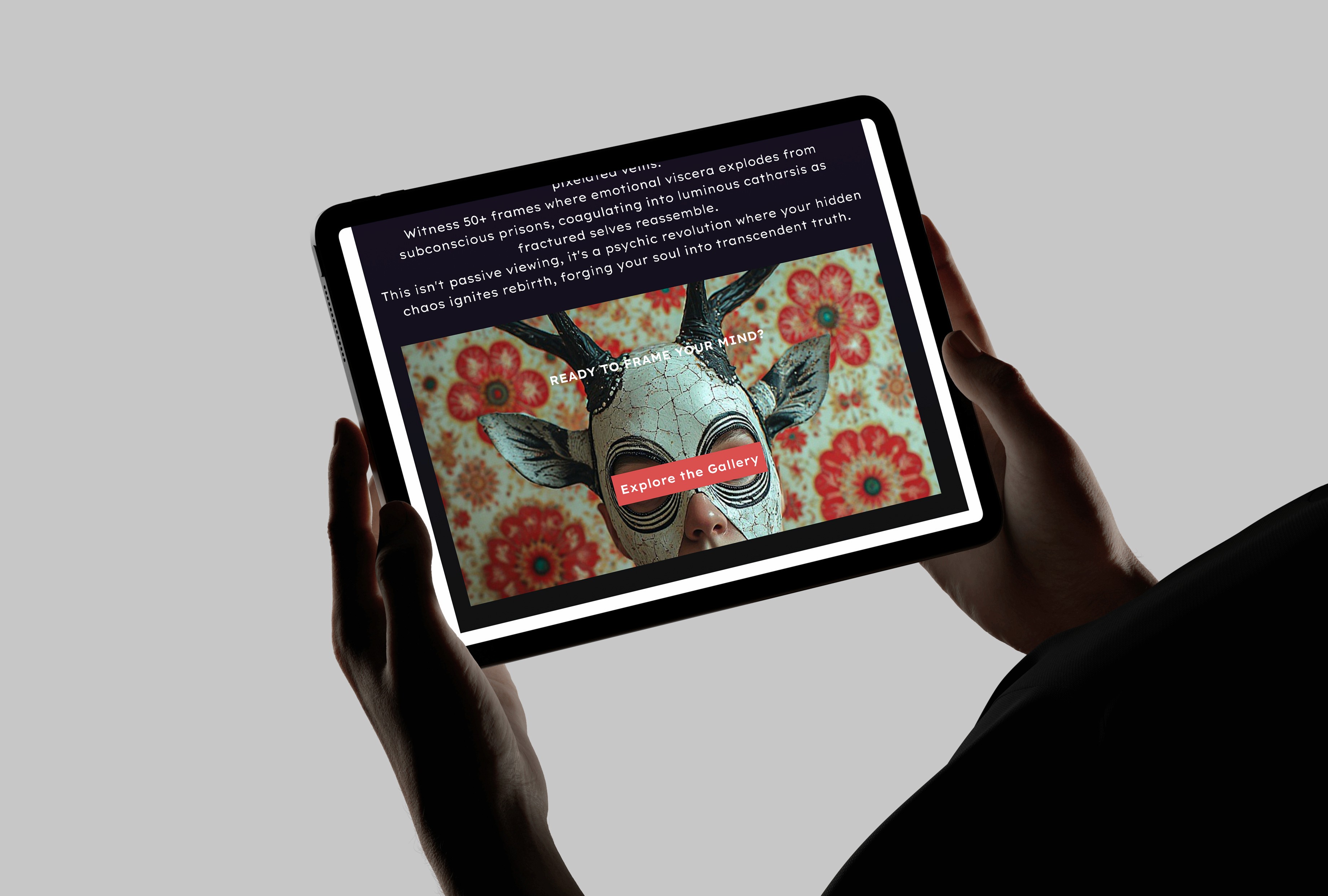
On tablets like iPad or Android equivalents, the design leverages portrait/landscape fluidity with Tilt Prism headlines scaling
dynamically to thumb-friendly sizes, while Lexend Giga body text maintains optimal line lengths for reduced cognitive strain
during immersive art scrolling, evoking focused discovery amid the 1F0A36 to 101212 Linear Gradient backdrop.
MindFrame Gallery excels in UI/UX design by delivering flawless responsive performance across tablets, laptops, and desktop monitors, ensuring perceptual harmony and intuitive flow that amplifies its "mind frame" psychological solution.
On tablets like iPad or Android equivalents, the design leverages portrait/landscape fluidity with Tilt Prism headlines scaling dynamically to thumb-friendly sizes, while Lexend Giga body text maintains optimal line lengths for reduced cognitive strain during immersive art scrolling, evoking focused discovery amid the 1F0A36 to 101212 Linear Gradient backdrop.
MindFrame Gallery excels in UI/UX design by delivering flawless responsive performance across tablets, laptops, and desktop monitors, ensuring perceptual harmony and intuitive flow that amplifies its "mind frame" psychological solution.
On tablets like iPad or Android equivalents, the design leverages portrait/landscape fluidity with Tilt Prism headlines scaling dynamically to thumb-friendly sizes, while Lexend Giga body text maintains optimal line lengths for reduced cognitive strain during immersive art scrolling, evoking focused discovery amid the 1F0A36 to 101212 Linear Gradient backdrop.